Large-Scale Event Management Tips
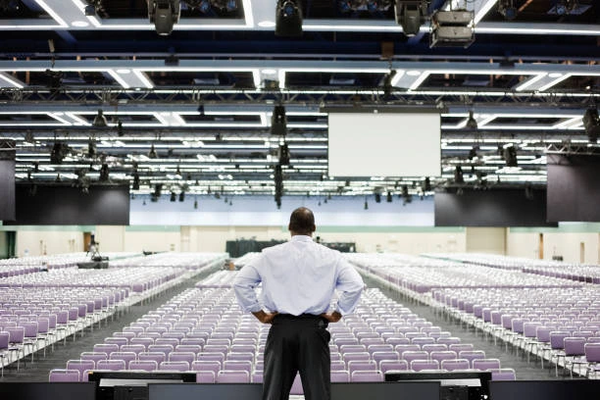
What is a large-scale event?
Large-scale events take more time, effort and planning than others. For example, trade shows, product launches, and corporate parties often involve the whole company. Delivering a large-scale conference or event is hugely rewarding. However, the bigger the event, the bigger everything needs to be. Planning an event can be challenging, but when it comes to large-scale event planning for guests in the hundreds or even thousands, it becomes even more challenging. Large groups of guests mean a more extensive audience you need to please and cater to. This means that your event needs to be planned out with precision and care. You need to upscale time budgets, teams, and resources according to scale. Planning in advance becomes even more important.Start Early
The earlier you start planning your event, the better off you will be. You want to have time to make sure everything goes smoothly. If you wait until the last minute, you may find yourself scrambling to get things done on short notice. Start early so you have plenty of time to plan ahead for this major event. Get your event checklist started early. On your event checklist, you should have your event goals, event concept, event theme, guest speakers if needed, food and drinks, and a very important part, your event marketing plan.
Always have a backup plan
When it comes to a large-scale event there are many things you can't control. But what happens when those uncontrollable factors occur? How do you respond? What does it mean for your brand? And how do you prepare for it? A backup plan is something that you can rely on no matter what happens. It's not just about being prepared for the worst-case scenario; it's also about knowing that you're ready for anything. Having a backup plan gives you peace of mind. It allows you to focus on other aspects of your event while you work onConfirm the date and venue
This may seem obvious, but you must remember it is not any other event. Not all venues can support that many people, so this narrows down your choices when picking where you will have your event. Venues are already filled up months and even years in advance, especially at this present moment, so once you know how many guests you will be inviting and your date, confirm the venue next.Other than the venue confirmation, the date must be confirmed as soon as possible.
Typically, at large-scale events, there will be many important people attending either as a guest or speakers. Therefore, you want to ensure you give them enough time because their schedules get filled up fast, and you want to do everything you can to lock in their attendance.
Knowing you have a date and venue will ease the stress and allow you to start large-scale event planning
Delegate tasks as much as possible and communicate with your team
You might need to add more people to your event planning team when large-scale event planning. Every aspect of the event should be divided between your team.For example, for a small-scale event, maybe one person would oversee many things as well as create the menu and order food from the caterers; for a large-scale event that cannot be just one person. Much more goes into each of those tasks when planning this type of event. Creating a menu and ordering food for a party of 50 is one thing, but when it comes to the thousands, there are more dietary restrictions you need to keep in mind for guests and more diversity; people can be very picky about what they eat.
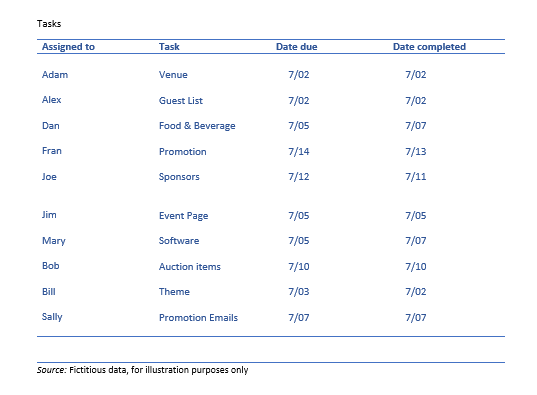
Sometimes delegating tasks can be difficult because now instead of one person knowing exactly what is happening in all departments, you only know what you have done and what you must do. Keep that in mind, and stay connected with your event management team so no one is guessing what is happening. Creating a shared excel sheet or google document like the one below can be a quick and easy way to share with your team what you have done. This also allows others to help if someone is falling behind so all deadlines are met.
Organization
This can also be overlooked because of course, you will be trying to do everything to be as organized as possible, especially when planning an event but at such a large scale many other things take your attention away from that. There is a strict planning process that must be followed when planning any event, by incorporating these tips below it will make sure you stay as organized as possible.Creating a daily or even weekly to-do list will remind you what you need to get done and help encourage you to show you how much you have already done. Then, at the end of each day review it.
Make a separate email for all things that event. This helps keep everything in the same place. You can give this email to all vendors, attendees, and your teammates. Your emails will not be able to get lost in your personal email.
Have a backup plan for as many things as possible. Even if you are 100% something is planned and ready to go for your event try to keep in the back of your head that something can always go wrong. For example, if someone cannot get to your event due to weather or personal issues but would still like to be involved somehow. Do you have a zoom meeting link set up in case? Taking these small extra steps even if they are not needed will ensure that if anything goes wrong you have it covered.
Create deadlines; even if there is no deadline to your task other than having it done before the event create one for yourself. Knowing you need to finish everything but the event does not help with staying organized. Instead, sit down and group your task and create different deadlines for each group. This splits everything up and makes it more manageable.

Check-in and registration
Checking in for any event always creates a line, especially for a large-scale one. Therefore, keeping everything moving and efficient is crucial to keeping your guest happy. Some things to help with this everlasting problem are creating multiple areas where guests can enter and check in so there is no crowding and the lines get split up, creating a shortened wait time.To eliminate lines within large groups having an event registration software as Events.org offers will allow you to email the guest before the event starts for them to personally, on their phones check in to the event so once they get there they can start enjoying themselves immediately.
Lastly, having a self-serve check-in kiosk in addition to a check-in desk. This allows attendees to pick between self-serve or the line; some prefer to do things independently and not wait for help. Cater to your target audience when planning what check in style to do. Having some of your event team at the kiosk to ensure it runs smoothly would also help keep large groups moving.

Event management for a large-scale event can be much more in-depth than any other event, by keeping these points in mind when planning will make the process smoother for your successful large-scale event.
Business Events
 Your All-in-One Event Management Platform
Host Events with Ease! Events.org's comprehensive event management platform makes it easy to optimize, automate and maximize your organization's entire charitable event calendar.Events.org Benefits:
✓ Simple, Affordable Pricing for Paid Events: $1 per Transaction!
✓ FREE Events are always FREE
✓ Host & Manage Any Event
✓ Dedicated Customer Support
✓ Branded Event & Donation Pages
✓ Donor and Contacts Management (CRM)
✓ Membership Management
✓ Conference Management
✓ Volunteer Management
BONUS: Free access to the iBid's Mobile Auction AutoPilot™ - This automation tool saves you time & stress while streamlining auction tasks. Manage auction items and payment processing, including express checkout & digital receipts!